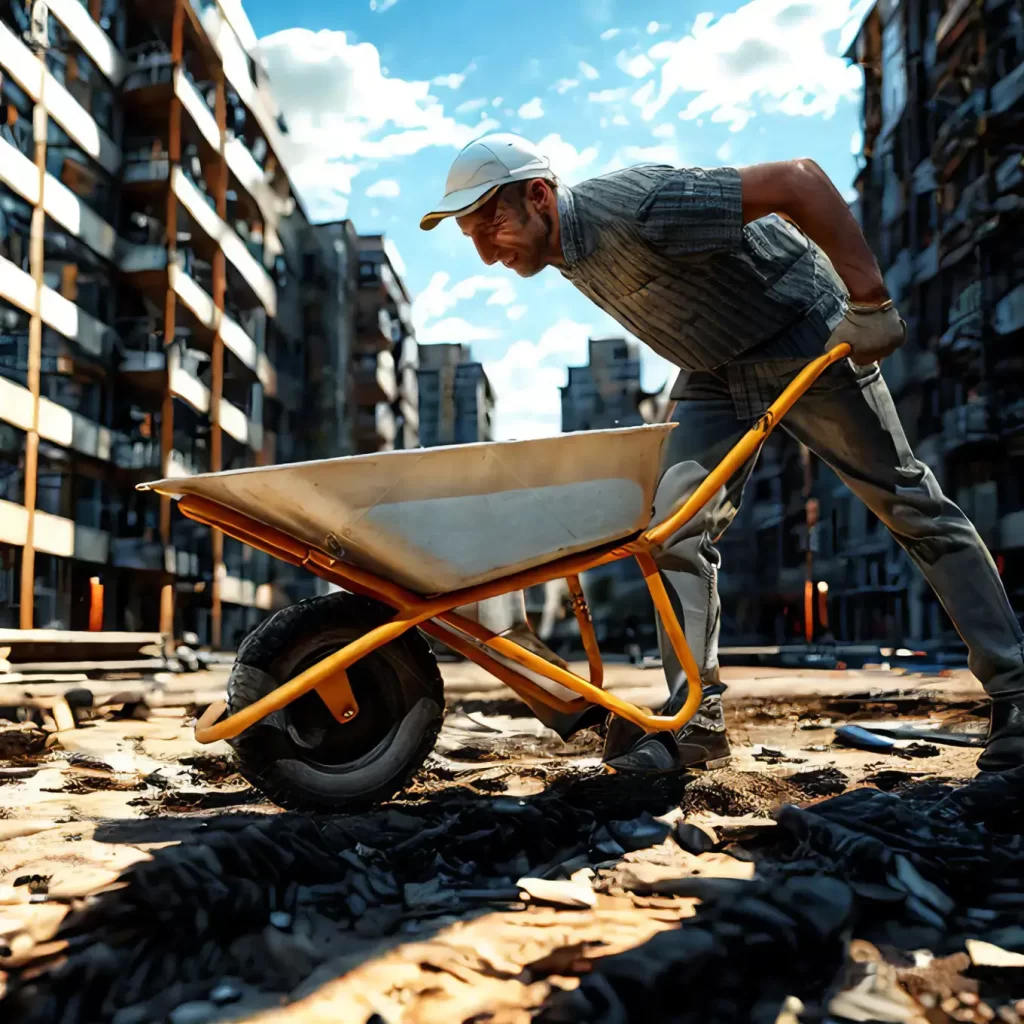
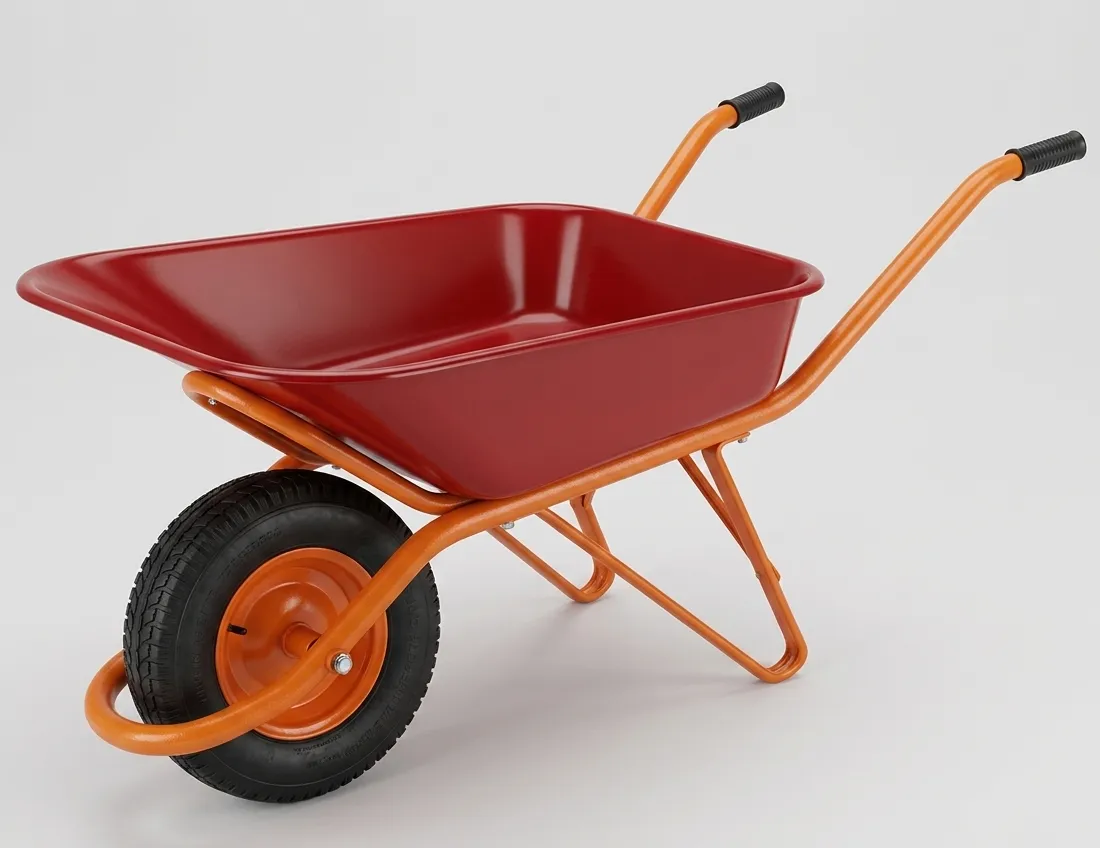
A contractor walks into a yard after winter. His steel wheelbarrow looks fine on the outside. The yellow powder coat is still bright. He loads 250 pounds of wet gravel, lifts the grips, and one handle snaps right in half near the rear leg bracket.
Look inside the broken tube, and the reason is obvious. The outer steel wall is still coated. The inside wall is paper-thin, eaten away by layers of flaky orange rust.
This is one of the most common warranty headaches for hardware brands, farm suppliers, and equipment rental yards. Crews and homeowners almost always store wheelbarrows standing upright against a wall or flipped upside down on the ground. Rain runs into the hollow tubular steel handles, gets trapped, and rots the metal from the inside out.
The short answer: You cannot fix internal handle rust with thicker outside paint. A qualified commercial wheelbarrow oem stops inside-out rot at the structural design stage by combining four factory controls: 5–6 mm drainage weep holes placed on the neutral bending axis, dual-barrier sealed grip ends, sealed bolt points (or welded external tabs), and true internal corrosion protection via cathodic E-coating or pre-galvanized tubing. When water can neither enter easily nor sit trapped inside raw steel, handle life jumps from 2 years to 7–10+ years.
Below is a direct, factory-floor breakdown of how water gets inside steel handles, why spray powder coating misses the interior completely, and the exact structural drawings and QC checks B2B buyers should put in their RFQ.
How Rainwater Gets Inside Hollow Handles (and Why They Snap Without Warning)
Most buyers think a steel handle is a closed pipe. In reality, a standard stamped-and-bolted wheelbarrow handle has six to eight open entry points for water.
1. Upright Storage: The Grip-End Funnel
Many crews store wheelbarrows standing upright on the front wheel and nose guard, leaning against a fence or shed. That tilts both hollow handles skyward like open chimneys.
- Standard slip-on PVC hand grips often have a small 3–4 mm air vent hole punched in the tip during blow molding.
- Even solid-tip grips loosen over a hot summer. Rain runs down the outside of the steel tube, wicks under the loose rubber lip, and drips straight down the hollow bore.
- Once inside, the water hits the flattened front nose end (where the tube bolts to the axle bracket) and pools right there.
2. Upside-Down Storage: The Bolt-Hole Trap
Other yards store wheelbarrows flipped upside down so the tray stays dry. That protects the tray, but it often destroys the handles even faster.
- Every wheelbarrow handle has 4 to 6 through-drilled bolt holes for the tray, leg braces, and front nose guard.
- When flipped upside down or tilted back, rain enters through those unsealed bolt holes on the underside of the tube.
- Gravity pulls the water down toward the rear hand grips. Because the rubber grip caps the end of the pipe, the water has zero escape route. It sits trapped inside the grip zone like a wet cup for months.
3. The Hidden Math of Inside-Out Corrosion
Why does trapped water break a steel handle so fast? Because stagnant, wet, dark steel corrodes much faster than exposed steel that dries in the sun.
In open air, wet steel dries out in an hour and corrosion pauses. Inside a dark hollow tube with trapped water, humidity stays near 100% for weeks. Based on standard atmospheric and crevice corrosion rates for uncoated mild carbon steel (like Q235 or SAE 1010–1020), damp trapped zones lose roughly 0.10 to 0.25 mm of steel wall per year—and up to 0.40 mm per year if wet concrete dust, lawn fertilizer, or mulch acids wash in through the tray bolt holes.
Look at what that does to a budget 1.2 mm (18-gauge) steel handle:
- Year 1: Inside wall drops from 1.2 mm to ~0.95 mm. Outside looks brand new.
- Year 2: Inside wall drops to ~0.65 mm near the rear leg bolt hole.
- Year 2.5: The tube has lost nearly half its steel thickness right where lifting stress peaks. Under a heavy load of wet sand, the handle buckles or snaps cleanly.
Because the exterior paint hides the thinning metal, the failure happens with zero visual warning. For a hardware retailer or rental fleet, a sudden handle snap under a 300-pound load is not just a return—it is a real job-site injury risk.
Why Exterior Powder Coating Never Protects the Inside of a Tube
Many importers assume that specifying “heavy-duty powder coating” protects the whole handle. It does not.
Spray powder coating relies on static electricity to pull dry powder onto grounded metal. Due to a basic physics rule called the Faraday cage effect, electric field lines stay on the outside of a hollow metal pipe. They cannot pull powder deep inside a 32 mm or 38 mm narrow tube.
In normal factory spraying, powder penetrates only 15 to 30 mm past the open end of a handle—and almost zero powder enters through an 8 mm bolt hole. That means over 95% of the inside wall of a spray-painted steel handle is completely bare, raw carbon steel.
Even worse, raw electric resistance welded (ERW) steel tubing comes from the mill with a strip of dark weld flash and mill scale running down the inside seam. That rough inside weld seam holds moisture and acts as a starter point for deep pitting rust the very first time water gets inside.
The 4 Structural Fixes Every Commercial Wheelbarrow OEM Should Use
Fixing internal handle rust does not require expensive exotic metals. It takes smart mechanical design during tube cutting, punching, and welding. Here are the four structural methods a capable commercial wheelbarrow oem uses to keep hollow handles dry and solid.
Fix 1: Engineered Drainage (Weep) Holes—Size and Location Matter
If water enters a tube through condensation or bolt seams, it must drain out within seconds. Randomly drilling a tiny hole anywhere on the handle will either clog immediately or weaken the frame. Good drainage design follows three strict rules:
- The 5–6 mm Diameter Rule: Never use 2 mm or 3 mm pinholes. Water surface tension bridges small holes, and one flake of rust or speck of dirt plugs them shut for good. On the other hand, holes larger than 8–10 mm remove too much steel from a 32 mm handle. The industrial sweet spot is a clean 5 mm to 6 mm (3/16″ to 1/4″) drain hole (or an oval slot measuring 5 mm × 10 mm).
- Place Holes on the Neutral Axis (Never on the High-Tension Bottom Wall): When a worker lifts a loaded wheelbarrow, the top wall of the handle is under compression and the bottom wall is under peak tension. Punching a drain hole right on the bottom centerline near the rear leg bracket creates a crack starter. Instead, engineers place drain holes near the neutral axis (low on the inner side wall) or right at the low-stress terminal ends (within 25–40 mm of the front tip and just ahead of the rear grip).
- Cover Both Storage Angles: Put one drain point near the front axle end (for upright vertical storage) and one drain point just in front of the rear hand grip (for upside-down or tilted storage). Punch every drain hole before chemical washing and coating so no raw sheared metal is left bare.
Bonus factory benefit: Proper 5–6 mm end drain holes are not just for rainwater. They are mandatory if you upgrade to cathodic E-coating or hot-dip galvanizing, because liquid primer and molten zinc need clean entry and exit vents to coat the inside tube walls evenly without air pockets.
Fix 2: Dual-Barrier Sealing at Both Tube Ends
Drainage is your safety net. Blocking water at the front door is your first line of defense.
- Upgrade the Rear Hand Grips: Ditch loose, open-tip blow-molded grips. Specify closed-end injection-molded TPR or heavy PVC grips with zero vent hole at the end.
- Add an Internal Ribbed Plug First: Before pressing the grip onto the steel handle, insert a tight-fitting LDPE ribbed end plug (or weld a thin steel cap) flush into the tube mouth. Even if a worker cuts or tears the rubber grip on a brick wall two years later, the inner plug still blocks rainwater from pouring straight into the pipe.
- Fix the Front Crimped Tip: Many wheelbarrows flatten (crimp) the front 50–80 mm of the steel handle to form a flat mounting ear for the front nose guard and wheel bracket. A standard mechanical crimp does not seal watertight—it leaves two tiny crescent cracks at the corners that suck rainwater inside via capillary action. A reliable commercial wheelbarrow oem either MIG seal-welds the crimped front seam completely shut or cuts a 45-degree open bottom bevel so water drips straight out instead of sitting behind the pinch.
Fix 3: Stop Water From Entering Through Bolt Holes
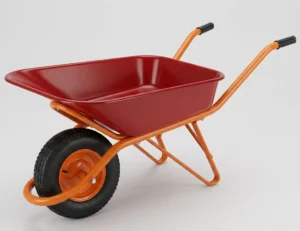
Look at a standard contractor wheelbarrow. Six carriage bolts pass straight through the hollow steel handles to hold the tray, risers, and legs. Every unsealed bolt hole is an open funnel.
Factories solve bolt-hole intrusion in three progressive tiers:
- Tier 1 (Standard Upgrade): Use EPDM-backed steel sealing washers (bonded neoprene washers) under the bolt heads on top of the tray and handle. The rubber compresses tight when torqued and seals out rain and wet cement slurry.
- Tier 2 (Heavy Contractor Spec): Insert internal steel crush sleeves (spacer tubes) inside the handle at each bolt point. Without a crush sleeve, tightening a 10 mm bolt crushes the hollow steel tube inward, cracking the exterior powder coat and creating a concave dimple that pools rainwater directly into the hole. Crush sleeves keep the tube round and lock the bolt torque solid.
- Tier 3 (Premium Zero-Hole Frame Design): Eliminate through-handle bolt holes altogether. Instead of drilling into the hollow tube, the factory robot-welds external steel mounting saddles or U-brackets onto the outside of the handle. The tray and leg bolts fasten to the external bracket flanges, leaving the hollow handle wall 100% intact, waterproof, and far stronger in bending.
Fix 4: Match Steel Wall Thickness to Real Bending Loads
Drainage slows rust drastically, but contractor wheelbarrows also take daily shock loads. Moving up just one steel gauge buys huge extra corrosion and fatigue margin right around bolt holes:
- 1.2 mm (18-gauge): Fine only for light homeowner leaf carts under 150 lbs. Too thin for wet job sites; minor internal rust causes rapid buckling.
- 1.5–1.6 mm (16-gauge): The baseline for solid retail and light commercial steel wheelbarrows.
- 1.8–2.0 mm (14-gauge): The true contractor standard for 6 cu. ft. masonry and concrete wheelbarrows carrying 350–500+ lbs.
- Internal Reinforcement Sleeves: On heavy 6–8 cu. ft. models, sliding a 200 mm long internal steel reinforcement sleeve inside the main handle right over the rear leg bracket zone doubles wall thickness at the exact spot where handles normally bend or snap.
Combining Drainage Design With Internal Coating: 4 Factory Options Compared
Drainage holes get standing water out fast, but wet steel still holds condensation film on humid mornings. For maximum service life, pair drainage design with true internal surface protection.
Here is how the four real-world factory handle constructions compare on performance and B2B cost:
| Handle Construction & Process | Inside Wall Protection | Exterior Finish Quality | Estimated Outdoor Field Life (With Drainage) | Added FOB Cost Per Wheelbarrow (40HQ) | Best Market & Buyer Tier |
| 1. Bare ERW Tube + Exterior Powder Only (No Drain) | None (0% raw steel inside) | Good outside; hides internal rot | 1.5–3 years (high snap risk) | Baseline ($0) | Low-end seasonal promo (not recommended) |
| 2. Pre-Galvanized Steel Tube (Z120–Z180) + Drain Holes + Polyester Powder | Very Good (zinc on inside wall; minor weld-zone gap) | Very Good (custom Pantone colors) | 5–8 years | +$1.20 to $2.40 / unit | Mid-to-high retail & hardware chains |
| 3. Bare ERW Tube + Drain Holes + Cathodic E-Coat (CED) + Polyester Powder | Excellent (15–25 microns E-coat covers 100% of inside & holes) | Best (automotive-grade duplex finish) | 7–10+ years | +$2.00 to $3.80 / unit | Commercial contractor brands & rental fleets |
| 4. Hot-Dip Galvanized (HDG) Complete Frame + Drain Holes | Best (45–70+ microns molten zinc inside & out) | Industrial silver (or duplex powder) | 10–15+ years | +$4.50 to $7.50 / unit | Coastal regions, farms, masonry & heavy rental |
(Need the full exterior tray coating breakdown—including ASTM B117 salt spray and shovel-scratch creep tests? Read our metal garden cart & steel wheelbarrow coating guide.)
Why Pre-Galvanized Tubing vs. E-Coat Is the Main B2B Choice
For most importers working with a commercial wheelbarrow oem, Option 2 and Option 3 hit the sweet spot between durability and landed price:
- Pre-Galvanized Tubing (Option 2) is fast and cost-effective. The steel strip is zinc-coated on both sides before being rolled into tubing. Just remember two details: the longitudinal ERW weld line burns off a thin strip of zinc inside, and punched bolt/drain holes have bare sheared edges. Still, with clean 5–6 mm drainage holes and sealed grips, pre-galvanized tubing easily doubles or triples handle lifespan over bare black pipe for less than $2.50 per unit.
- Cathodic E-Coat + Polyester Powder (Option 3) is the gold standard when you want custom brand colors and zero weak spots. Because the factory punches all bolt and drain holes first and then dips the finished handle into the E-coat bath, electrical current pulls protective epoxy primer onto every millimeter of the inside tube wall, weld seam, and punched hole edge.
The B2B Cost Math: Why a $2 Factory Fix Protects Your Brand Margin
When comparing quotes across suppliers, shaving $2.00 off the FOB price by accepting bare black steel tubes without drainage or internal coating looks tempting on a spreadsheet. On a 40HQ container holding 800 to 1,000 knocked-down (KD) steel wheelbarrows, that saves $1,600 to $2,000 upfront.
Now look at the downstream cost if just 3% to 5% of that container snaps handles within two seasons:
- Parcel replacement costs: Shipping a pair of 60-inch steel replacement handles by courier triggers oversized parcel surcharges—often $35 to $55 per claim in parts and freight. Forty claims wipe out $1,800+ right away.
- Retailer chargebacks and lost shelf space: Regional hardware chains track defect rates closely. Even a 2% structural failure rate on contractor wheelbarrows can get a SKU pulled during the next spring line review.
- Product liability exposure: Unlike a squeaky wheel or faded tray, a rusted steel handle that snaps while a worker is lifting 300 lbs of wet mortar can cause back injuries or crushed feet. One liability claim costs more than ten containers of wheelbarrows.
Spending $1.50 to $3.50 per wheelbarrow at the factory on 5–6 mm neutral-axis drain holes, closed-end plugs, and pre-galvanized or E-coated tubing eliminates that risk at the root.
OEM Quality Control Checklist: 5 Ways to Inspect Handles Before Shipment
Do not rely on sales brochures that say “rust-proof steel handles.” Before you approve a pre-production sample or release final balance payment to a commercial wheelbarrow oem, put these five simple checks into your QC sheet:
- The $30 Borescope Check: Slide a cheap USB inspection camera (borescope) into a finished sample handle through the grip end or bolt hole. You will see in ten seconds whether the inside wall is coated (gray/black E-coat or bright zinc) or bare, oily black mill steel.
- The Water-Pour Drainage Test: Stand the assembled wheelbarrow upright, pour 200 ml of water around the top grip seam, and check for leaks. Then inject 100 ml directly into a tray bolt hole and time how fast it drains out of the 5–6 mm weep holes. Zero water should stay trapped when you shake the handle.
- Micrometer Wall Thickness Check: Measure the tube wall thickness at the open end after stripping a small spot of paint (or measure uncoated raw tubes on the shop floor). Confirm you are getting true 1.5 mm or 1.8 mm steel—not 1.2 mm steel bulked up with 0.15 mm of thick paint.
- Grip Pull & Seal Inspection: Pull hard on the hand grip and inspect the tip. Confirm there is no open molding hole in the grip end, and pull one grip off a sample unit to verify the internal LDPE end plug is actually installed underneath.
- Bolt Torque & Tube Crush Check: Torque the tray and leg carriage bolts to full assembly tightness, then unbolt one joint. Check if the hollow tube wall caved in around the hole or cracked the powder coat. On heavy contractor models, verify internal crush sleeves or external welded mounting tabs are in place.
Frequently Asked Questions
1. Do drainage holes weaken steel wheelbarrow handles under heavy loads? Not when engineered properly. Placing 5 mm to 6 mm holes near the tube ends or along the neutral bending axis—away from the high-tension bottom centerline at the rear leg bracket—causes less than a 2% to 4% reduction in static bending strength, while preventing the 40%+ strength loss caused by hidden inside-out rust.
2. Can a commercial wheelbarrow oem switch from hardwood handles to rust-protected steel handles on the same tray? Yes. Most 6 cu. ft. steel and poly trays share standardized bolt-hole patterns. A commercial wheelbarrow oem can supply the same tray with either seasoned hardwood handles or 1.6–2.0 mm E-coated/pre-galvanized tubular steel handles, using matching risers and hardware kits in the same mixed container.
3. Why do some factories still skip internal plugs and drain holes on steel handles? Purely to shave pennies off unit cost and cycle time. Punching extra drain holes adds a press step, installing internal end plugs adds two parts plus manual assembly labor, and switching to pre-galvanized or E-coated tubing adds $1.50 to $3.50 per unit. Unless B2B buyers write those details into the RFQ, budget factories leave them out.
4. Should drain holes be left open, or plugged with rubber grommets? Leave drainage weep holes open (never plugged), sized between 5 mm and 6 mm so water drains freely by gravity without clogging. Plugs belong only at the open rear mouth of the tube under the hand grip to stop rainwater from pouring in from above during upright storage.
Build Long-Life Contractor Wheelbarrows Direct from the Factory
A steel wheelbarrow should never fail from hidden rust inside a tube. With neutral-axis drainage holes, dual-sealed grip ends, non-crushing bolt hardware, and pre-galvanized or E-coated tubing, you can ship contractor-grade wheelbarrows that survive years of rain, wet concrete, and upright yard storage.
With 20 years of metal fabrication experience, we operate as a direct commercial wheelbarrow oem supplying hardware brands, distributors, and rental suppliers across North America, Europe, and Australia. Alongside heavy-duty steel and poly wheelbarrows, you can consolidate steel mesh garden carts, foldable wagons, 55-gallon drum dollies, welded hand trucks, and platform carts in one mixed 40HQ container.
Want handle CAD drawings, wall-thickness options, or a factory-direct quote for your next wheelbarrow order? Explore our Contractor Wheelbarrows or contact our engineering team with your target tray volume and container plan—we will send back a matched spec sheet and 40HQ loading layout within 24 hours.